
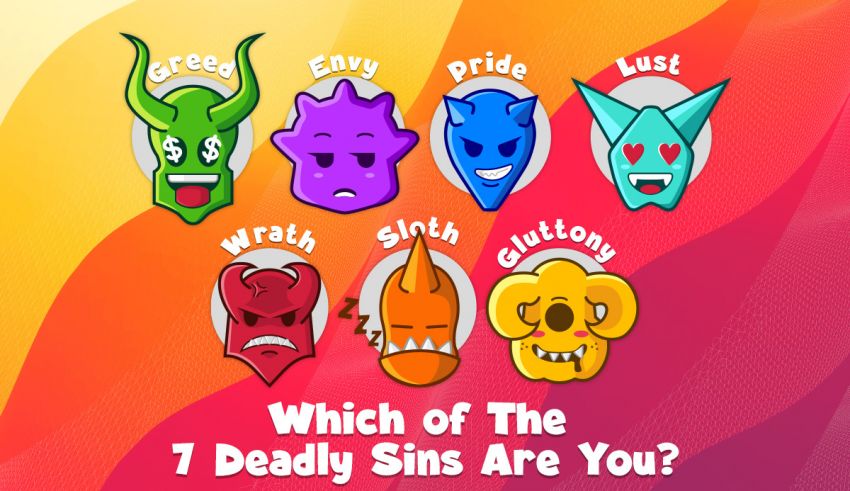
What the seven deadly sins mean
The question “Which of the seven deadly sins are you?” borrows names from Christian tradition for a playful personality match. Here, each name is an archetype, a familiar character pattern you might recognize in fiction or yourself. This is entertainment for self-reflection, not a moral assessment or psychological test.
The list developed over centuries. In the fourth century, the monk Evagrius Ponticus wrote about eight troubling thoughts. Pope Gregory I reworked that tradition in the sixth century. The familiar seven-item list took shape through later Christian teaching; it wasn’t one monk’s finished list.
How this quiz works
You answer 15 questions about imagined situations. You might pick a magical accessory, decide what to do after a festival closes, or respond to someone who mistakes you for a celebrity.
Those choices connect preferences such as recognition, comfort and competition with the seven result themes below. Pick the answer closest to your first reaction. You don’t need to guess which choice sounds most admirable.
Your result is a character-style match based on those answers. You can agree with part of the description and leave the rest. If you enjoy the dragon question, you might also like exploring which Wings of Fire dragon fits your style.
Reading the seven possible results
Pride
Pride puts recognition and confidence near the center of the story. The useful question is how much praise matters to you when you’re already pleased with your work.
Greed
For Greed, collecting and securing resources take priority. Planning ahead can be useful; the tension starts when having enough still feels like falling behind.
Lust
Lust brings attraction and the pull of excitement into focus. Ordinary attraction isn’t a personal failure. This archetype gives you room to consider how desire influences a choice.
Envy
Someone else’s success catches Envy’s attention. Comparison can help you notice something you want, though it can also distract you from what you already enjoy.
Gluttony
Gluttony leans toward abundance and another helping of a good experience. Read this as a fictional theme around wanting more, without drawing conclusions about your eating habits or body.
Wrath
Frustration fuels the Wrath archetype. A blocked plan or an unfair rivalry might grab your attention. The label doesn’t establish anything about how you handle anger in daily life.
Sloth
Sloth favors ease and fewer demands. Enjoying rest is ordinary. For reflection, consider the difference between choosing a break you want and postponing something you care about.
The virtues traditionally paired with the sins
A common traditional pairing sets pride against humility, greed against charity, lust against chastity, and envy against kindness. Gluttony is paired with temperance, wrath with patience, and sloth with diligence. These are often called opposing virtues; the cardinal virtues are a different group.
Your quiz match doesn’t prove you lack any virtue. You can enjoy recognition and show humility. You can also feel frustrated and still choose a patient response.
Leave a Reply