
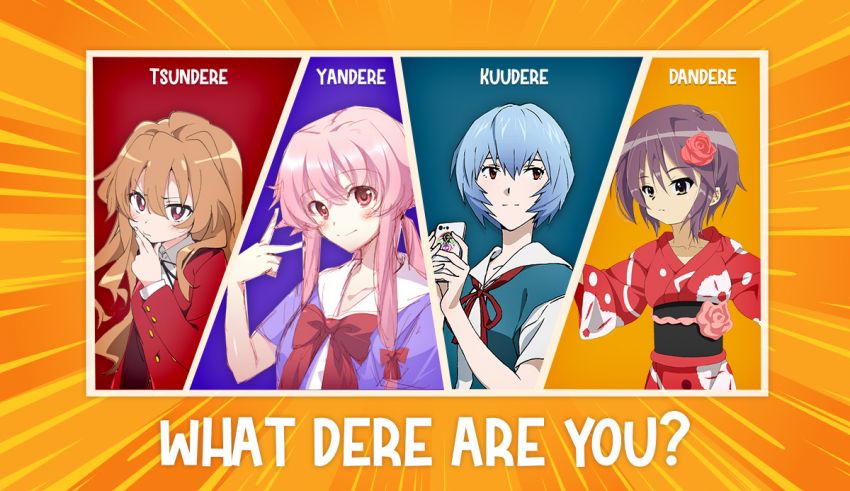
What dere means in anime
Dere comes from the Japanese word derederewhich describes a lovestruck or lovey-dovey manner. In anime discussions, dere types are fictional character patterns for how someone shows affection. An archetype is a familiar kind of character, such as someone who hides a soft side behind a tough attitude.
Asking “what dere are you” is a playful way to compare your habits with those patterns. Characters can fit several types, and you can relate to different ones in different situations. If you enjoy broader character roles, you can also explore which anime stereotype fits your answers.
How this quiz works
The quiz has 15 questions about everyday interactions and anime-themed situations. You’ll choose how you’d help a teammate, respond to praise, or share snacks during an anime marathon. Other questions ask about texting and a first date you’d feel comfortable suggesting.
Your choices help compare four fictional styles: guarded, reserved, shy, and openly affectionate. The possible matches are Tsundere, Kuudere, Dandere, and Deredere. Pick the response closest to what you’d actually do, even if another answer sounds more like your favorite character.
The distinction is often how you express care. Helping quietly and giving someone a cheerful pep talk can both be kind responses, but they fit different character patterns.
What the four results mean
Tsundere
A Tsundere character has a guarded manner and a softer side that becomes easier to see over time. For this match, picture someone who feels awkward accepting praise but still helps a teammate catch up. The appeal is that gap between their words and their care. Hurtful behavior isn’t proof of affection.
Kuudere
Calm reactions and restrained words fit the Kuudere pattern. A character with this style might remember your usual snack without making a speech about it. If you connect with this result, you may prefer quiet gestures to big declarations. Being reserved doesn’t tell anyone how much you care.
Dandere
The Dandere pattern centers on someone who’s shy at first and more talkative once they feel comfortable. You might recognize the wish to join a conversation while needing a little time to speak up. Within this fictional style, affection becomes easier to express as trust grows.
Deredere
Warmth is easy to notice in a Deredere character. They tend to say they’re happy to see someone and give encouragement without much hesitation. This match fits answers where you express care openly. You can relate to that openness and still want personal space or quiet time.
Character examples to compare
These classifications are interpretations, and a character’s behavior can change across a story. Taiga Aisaka from Toradora! is a useful Tsundere comparison. Rei Ayanami from Neon Genesis Evangelion fits a Kuudere reading through her reserved manner.
For Dandere, consider Hinata Hyuga’s early shyness around Naruto in Naruto. Tohru Honda’s openly caring behavior in Fruits Basket fits a Deredere interpretation.
Your result is a fictional match for entertainment and self-reflection, not a diagnosis or a relationship assessment.
Leave a Reply