
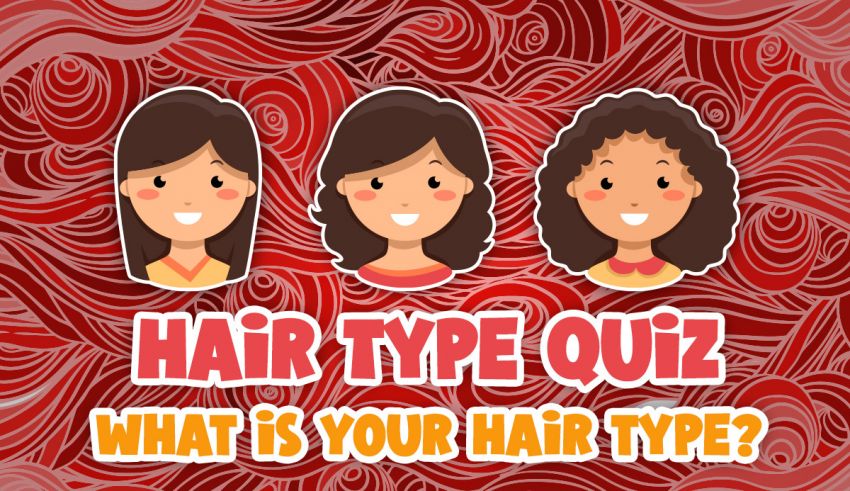
Your hair behaves in patterns. When you learn those patterns, care gets simpler. This quiz helps you find your pattern at home and gives practical care tips. It also notes where typing falls short, so you can use it as a tool, not a rule.
What “hair type” means
Hair type usually refers to the shape of strands when they dry without styling: straight, wavy, curly, or coily. Two popular systems describe this:
- Andre Walker groups hair into Types 1 to 4 with a, b, c subtypes by curl size.
- FIA looks at curl pattern, volume, and strand width.
Researchers are also testing quantitative ways to classify curls, such as counting curves per length. That work is ongoing, but it helps explain why two people with “3C” hair can still behave differently.
How to identify your hair type at home
Use a clean slate and simple checks. You do not need special tools.
Step 1. Start with a reset wash
Shampoo and condition as usual. Skip heavy stylers for this test. Let your hair dry without brushing. Blot with a cotton T-shirt or microfiber towel. Do not rough-rub.
Step 2. Observe the pattern
- Straight dries flat from root to tip.
- Wavy forms loose S-shapes, often straighter at the roots.
- Curly forms clear loops or spirals.
- Coily forms tight coils, zigzags, or springy corkscrews.
Look at multiple sections. Many people have mixed patterns.
Step 3. Note density
Stand in good light and look at your scalp without parting. If you see a lot of scalp, density is low. If you barely see scalp, density is high. A quick check is a low ponytail. If the ponytail looks slim, density is likely low. Thick means high. Medium falls in between.
Step 4. Consider porosity
Porosity is how easily hair absorbs and holds water. After washing, time how fast your hair goes from wet to damp without heat. Fast-drying hair can be higher porosity. Slow-drying hair can be lower porosity. You do not need a “float test.” Watch real behavior over a few wash days.
Step 5. Check scalp oiliness
How your scalp feels 24 hours after washing matters. Oily scalp often needs more frequent cleansing or lighter conditioners at the roots. Dry or tight scalp may need gentler cleansing and more hydration. For general care guidance, see dermatologist tips on everyday hair care.
Key factors beyond “type”
- Strand width. Fine strands need gentle handling and lighter products. Coarse strands often tolerate richer formulas and more hold.
- Density. Low density benefits from airy stylers and less layering. High density often needs stronger hold to reduce puffiness.
- Porosity. High porosity tends to lose moisture quickly. Look for creams and film-forming gels. Low porosity benefits from light layers and occasional warm-water rinses to help products sink in.
How this quiz uses your answers
The quiz reads signals you can observe at home. Pattern, density, porosity, strand width, and scalp feel guide the result. We do not diagnose. We suggest a starting point so you can test products with less guesswork. If you are choosing a new style after you learn your type, What Haircut Should I Get? walks through shape and length decisions with examples.
Next steps after you find your type
- Match routine to goals. If you want volume and movement, you may prefer lighter products and minimal oils. If you want definition, layer hydration and finish with gel.
- Adjust for length and lifestyle. If you are debating a big chop, Should I Cut My Hair Short? can help you think through upkeep and face framing.
- Fringe needs its own plan. If you are considering a fringe on wavy or curly hair, see Should I Get Bangs? for pros and cons by hair behavior.
- Color changes porosity. If you plan to color after identifying your type, read What Color Should I Dye My Hair? to think through shade families and maintenance.
When to see a professional
Book with a licensed stylist or a dermatologist if you notice sudden shedding, scaling, burning, or patchy loss. A pro can tailor care to your scalp health and styling goals. For routine basics, these evidence-based care tips are a solid starting point.
Limitations of our hair typing quiz
Hair typing is a guide. Many heads have more than one pattern. Health, hormones, and chemical processes change behavior over time. Culture and identity also shape hair choices. Use the labels to narrow options, then trust what you see in the mirror. If something works for you, it works.













Leave a Reply