
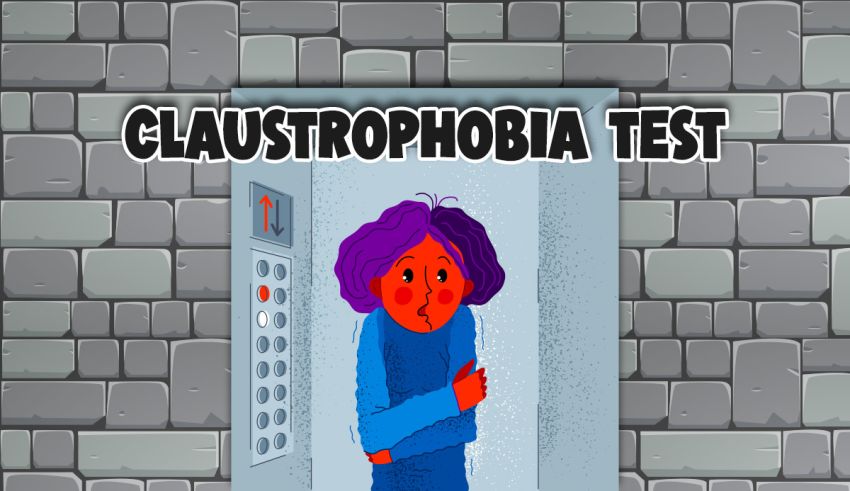
The Claustrophobia Test Explained
It’s a set of psychological questions that reveal if you fear narrow spaces with the impression of being trapped.
Note that similar to our Trypophobia Test, the questions are 100% safe and do not include triggering images.
Here, the primary goal is to expose your phobia by analyzing four crucial factors.
· Symptoms
The test examines and inspects all the signs you might be afraid of confined spaces.
According to NHS, the most common claustrophobic symptoms are sweating, trembling, hot flushes or chills, shortness of breath or difficulty breathing, a choking sensation, a rapid heartbeat, chest pain, or a feeling of tightness in the chest, a sensation of butterflies in the stomach.
· Experiences
Psychologists suggest that one of the primary causes of claustrophobia is trauma. So, the test extracts information about your upsetting or painful experiences to figure out if you have a phobia.
· Genetics
Having relatives with certain fears affect you. It’s believed that people with claustrophobic parents are more likely to undergo the same condition. So, the test also focuses on your genetics to finetune the results.
· Related phobias
Researches indicate that claustrophobia might be related to acrophobia or fear of height. While people with the latter condition overestimate the vertical space, the former group underestimates the horizontal space. So, we added some questions to expose any connections between your emotions and phobias.
Things You Learn by Taking the Test
Our editors didn’t want to leave you with a yes or no answer. So, the results include several extra pieces of information that would interest you. Here’s all you need to know.
Find the answer to “Are you claustrophobic?”
The premise of the questionnaire is to discover if you’re afraid of narrow or confined places. We created a database of symptoms, emotional and physical responses, and thought process patterns that claustrophobic people experience. Your answers help us match the information to the database, creating an accurate profile for you.
See if you have claustrophobia or cleithrophobia.
The noteworthy thing about the claustrophobia test is that it knows the difference between fear of narrow spaces and cleithrophobia. The latter is a fear of a situation, while the former is anxiety caused by being in a particular place. Cleithrophobia people feel threatened and scared when trapped in a place—no matter the size. But claustrophobic individuals only panic when the room is too small or overcrowded.
Your claustrophobia type.
Scientifically speaking, there are no different types of claustrophobia. However, people divide the fear into various groups based on the triggers. For example, fear of buses, airplanes, bathrooms, or elevators.
Learn more about your fear and where it comes from.
While it’s challenging to spot the root cause of a phobia, our test does its best to figure it out. By the end of the questionnaire, you receive a brief list of things that might have caused a fear of confined spaces in your brain.
How to Know if You Have Claustrophobia without a Test
You can ask yourself the following questions to find out if you are claustrophobic. It’s not an accurate technique, and we still recommend taking the quiz instead. But if you’re in a hurry or don’t trust online tests, this is your best bet.
Question #1: How anxious are you in a small or confined place?
Phobia is an irrational, uncontrollable fear or anxiety. So, you can’t call yourself claustrophobic if you just don’t like small places. A person with the condition would show extreme symptoms such as shortening of breath or faint. It’s important to know how significant and unbearable your emotions are to conclude a reliable result.
Question #2: How much effort do you put into avoiding enclosed or small places?
A person with a phobia might take extreme steps to get around a triggering situation. For instance, they may prefer to use the steps to get to the 8th floor instead of the elevator. So, if you’re asking yourself, “Am I claustrophobic?” try to think about your behaviors. Do you do everything in your power to decrease the probability of facing your fears?
Question #3: How does your fear affect your everyday life?
Claustrophobia can negatively affect your life, making it challenging to take care of your daily tasks. For example, you might be late for your work because you can’t take the bus or use the subway.
Question #4: What physical symptoms do you have?
The more intense symptoms you have in a small place, the more likely you are to be claustrophobic. The most common ones are excessive sweating, shuddering, hot flushes or chills, shortness of breath, or difficulty breathing.
What if the Claustrophobia Test Said You Have the Fear?
Don’t panic. The fear of narrow spaces is common among all people in the world. And it’s often cured by psychotherapy. But if you’re not ready to start clinical treatment yet, follow these principles instead.
Note: The tips on how to overcome claustrophobia are provided by Dr. Nicole Cain, a clinical psychologist.
Engage your logic.
When the anxiety and fear show up, you have to fight to stay in control. Your logic can lend a hand and help you remind yourself of the irrational aspects of your emotions. For example, airplanes are the safest transportation method. So, when you feel claustrophobic inside one, you can be logical about the possibilities and focus on facts—rather than feelings.
Stop the drama.
The more you avoid your fears, the stronger they become. So, if you took the claustrophobia test and realized you have it, the next step should be facing it. You have to force yourself to get numb to the triggering situations.
Focus on things that make you feel safe.
One useful technique is to think about your happiest memories or the safest places you know of when triggered. It helps your brain to shift the focus and hopefully forget about your flight or fight response mode.
Have a claustrophobia kit with you.
You can buy or create kits that make you feel safe. Your kit can include items that remind you of your satisfying memories or practical stuff like a GPS or flashlight to give the impression of security.
Disclaimer: Read Before Taking the Claustrophobia Test
The questionnaire on this page is designed to help people know if they have a phobia of small/narrow places. Like all other online equivalents, it’s not a clinical test. However, it’s based on clinical findings and claustrophobia facts. So, you can rely on the results. But you should not use them a medical proof for a condition. The only person who can diagnose you with any sort of excessive fear/anxiety is a trained psychiatrist or psychologist.
Please, contact us if you have any questions about the quiz or your results. We respond to all the comments and emails as quickly as possible.



















Leave a Reply